
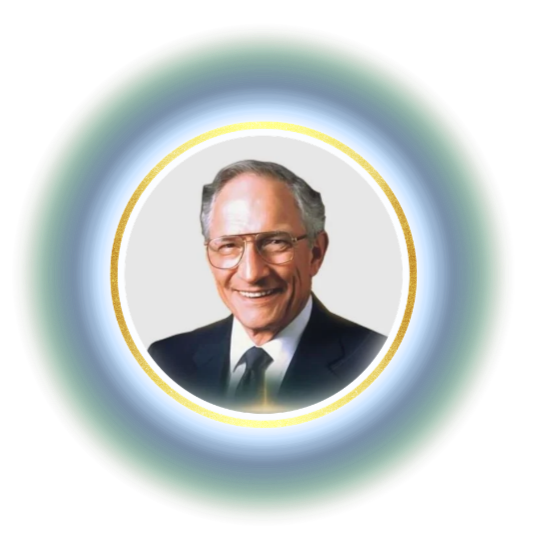
Notes on Noyce Section: Chapters 16-25
(To go directly to the notes for any chapter, click on the chapter number above)
Chapter 16: Monolithic Circuit
“Rapid Robert” and his move to California – When William Shockley recruited Robert Noyce to join his new semiconductor lab, Noyce—nicknamed "Rapid Robert" for his swift thinking and decision-making—moved quickly, even signing a contract for a house before going for his interview at Shockley Labs. This fast decision reflected Noyce’s characteristic boldness and appetite for risk [Berlin-1], [Malone-1].
Origins of Shockley Semiconductor – Shockley Semiconductor Laboratory, founded in Mountain View in 1956, was the first company dedicated to silicon semiconductor research and development in what would become Silicon Valley. Its brief but pivotal history is well documented in [Leibson-1, 2018] and [V-Shockley-Labs].
Stanford Industrial Park – Stanford Industrial Park, launched in the early 1950s, provided a unique model for university-industry collaboration. By leasing land to high-tech firms, Stanford fostered the growth of the regional technology economy [Hanson], [Lécuyer-1], [F-Silicon-Valley].
Shockley’s authoritarian management – Shockley’s domineering approach fostered mistrust and discontent at Shockley Semiconductor. One notorious incident was his demand that employees take a lie-detector test after a secretary injured her hand on a pin left in a door, a proposal the staff rejected as insulting [V-Moore]. His erratic behavior exposed his lack of people skills and contributed to the departure of many employees [Berlin-1], [O-Fairchild].
Rickey’s Hotel and the Clift Hotel– Two key meetings depicted in the novel are based on real events at dining establishments [Berlin-1]. In November 1956, Shockley hosted a Nobel Prize celebration at Rickey’s Hotel (later Hyatt Rickey’s) in Palo Alto [W-CHM-Rest-Guide]. In June 1957, the Traitorous Eight met with Arthur Rock and Arnold Coyle at the Clift Hotel’s Redwood Room to seek backing for their new venture. Rickey’s has since closed; The Clift is now The Clift Royal Sonesta Hotel [W-Clift-Hotel].
Founding of Fairchild Semiconductor – In 1957, eight key employees left Shockley Semiconductor to launch Fairchild Semiconductor, a move that would profoundly shape the future of Silicon Valley. The founding story is richly detailed in [F-Silicon-Valley], [O-Fairchild], [Laws, 2017] and [Philips, 2018].
Meeting with Sherman Fairchild– Venture capitalist Arthur Rock arranged for Noyce and his colleague Eugene Kleiner to meet with Sherman Fairchild, whose investment ultimately made Fairchild Semiconductor possible [Berlin-1], [Malone-1].
IBM’s first order and Brillo box shipment – One of Fairchild’s early breakthroughs was securing an order from IBM. The first batch of chips was famously shipped in Brillo soap pad boxes, as the company had no proper shipping containers ready at the time [Berlin-1], [Malone-1], [F-Silicon-Valley].
The “tap problem” crisis– Fairchild engineers faced a major manufacturing challenge known as the “tap problem,” which jeopardized the reliability of their transistors [Berlin-1], [F-Silicon-Valley].
Hoerni’s planar process– Physicist Jean Hoerni devised an elegant solution to the tap problem, named the “planar” process as it was much flatter than the previous “mesa” process. This breakthrough became a foundational technology for modern semiconductor manufacturing [Hoerni, 1960], [Hoerni-Pat1, Hoerni-Pat2], [W-CHM-Planar].
John Ralls and Noyce’s conceptual leap– Prodded by attorney John Ralls, Noyce began thinking more expansively about the planar process, leading to the conceptual breakthrough that would make integrated circuits possible [Berlin-1], [O-Noyce].
Moore-Noyce aluminum contact patent – Gordon Moore and Robert Noyce patented a key method for using aluminum to contact both N-type and P-type silicon regions, an essential step for constructing an integrated circuit [Moore-Noyce-Pat].
Dinah’s Shack – The lunch meeting between Noyce, Moore and Ralls portrayed in the novel is fictional. However, the venue Dinah’s Shack was a real and much-loved Palo Alto restaurant and informal gathering spot for the local tech community in the 1950s–1990s. It has since closed [W-CHM-Rest-Guide].
Military demand for lightweight computers – The U.S. military was willing to pay almost any price for lightweight, compact computer boards containing thousands of components—“sky’s the limit,” as they said. In early 1959, Edward Keonjian, developer of the onboard computer for the Atlas rocket, pressed Fairchild to pursue microcircuits that could meet these demanding requirements [F-Silicon-Valley], [W-IC-Invention], [Lécuyer-2].
“Tyranny of numbers” bottleneck – As transistor counts rose, the wiring complexity between components became a severe limitation, known as the “tyranny of numbers.” This problem, clearly explained in [Reid] and [Isaacson-3], was a key motivating factor for the development of the integrated circuit.
Invention of the monolithic integrated circuit– Noyce’s synthesis of ideas from the planar process, combined with insights from colleagues and prior work, led to his conception of the first monolithic integrated circuit. The story of this pivotal invention is detailed in [Berlin-1], [O-Noyce], [Laws, 2013] and [W-CHM-IC].
TI’s announcement of integrated circuit– At a major trade show in March 1959, Texas Instruments publicly announced its new integrated circuit technology with aggressive bravado. A TI salesman reportedly told Jerry Sanders, “We’re going to bury you guys,” as quoted in [F-Silicon-Valley]. Also see [Berlin-1].
Hoerni’s planar transistor demonstration – Jean Hoerni vividly demonstrated the robustness of the first transistor built using his planar process by spitting on it in front of an audience—an unorthodox but memorable way to prove its protective silicon oxide layer worked [Berlin-1].
Noyce’s “cocoon” analogy – Noyce described Hoerni’s planar process as akin to performing surgery inside a “cocoon” while surrounded by a jungle, emphasizing how it protected the delicate transistor elements from environmental contamination [Reid], [Berlin-1].
Noyce’s strategic response to TI announcement– In internal meetings to discuss next steps for building an integrated circuit, Noyce emphasized the urgency of competing with Texas Instruments. Noyce told Jay Last they would need to “show the flag” at the upcoming Wescon trade show to signal that Fairchild was also in the race with a superior product [Berlin-1], [O-Noyce].
Noyce’s patent on monolithic IC – Working closely with attorney John Ralls, Noyce drafted the seminal patent describing a “unitary circuit structure” that became the basis of Fairchild’s integrated circuit. This foundational work is documented in [O-Noyce], [Noyce-Pat1, Noyce-Pat2].
Chapter 18: The Birth of Silicon Valley
Shockley Labs landmark – The site of Shockley Semiconductor Laboratory in Mountain View is commemorated today as a historical landmark [V-Shockley-Labs], [Leibson-1, 2018].
Fairchild Semiconductor landmark – The original Fairchild Semiconductor location in Palo Alto is also marked by a historical plaque recognizing its central role in the invention of the planar process and the integrated circuit [W-IC-Landmark1, W-IC-Landmark2], [Leibson-2, 2018].
Noyce’s conceptualization of the integrated circuit – Noyce’s methodical approach to conceptualizing the integrated circuit drew on his deep understanding of both planar processing and circuit design. His reflections on this breakthrough are captured in [Berlin-1], [Reid], [O-Noyce].
Micrologic: first commercial integrated circuit – The completion and shipment of Fairchild’s Micrologic chip marked the first commercial delivery of a silicon-based integrated circuit, an event often seen as the true beginning of the IC industry [O-Micrologic].
Noyce and the Nobel Prize that might have been – When Gordon Moore attended the 2000 Nobel Prize ceremony in Stockholm, he did so partly in honor of Robert Noyce, who would have shared the prize for the integrated circuit had he lived [Reid].
Shockley’s four-layer diode – William Shockley’s attempt to commercialize his four-layer diode (also known as the Shockley diode) proved unsuccessful and became a cautionary tale of how leadership missteps can derail technical innovation [W-Shockley-Diode].
Noyce’s lost invention: the tunnel diode – Noyce independently invented a version of the tunnel diode but abandoned the work due to lack of support from Shockley [Berlin, 2005]. Years later, Leo Esaki won the Nobel Prize for this breakthrough as recounted in [Wood, 2011]. See also [W-Nobel-Esaki].
Lithography innovation at Fairchild– Inspired by the pioneering work of Jay Lathrop, Noyce recognized the potential of lithography for building integrated circuits. In a hands-on effort, he constructed an early lithography rig using camera lenses from a local photo shop, a key step that enabled the fabrication of Fairchild’s first planar transistors and integrated circuits [Miller, 2023].
Noyce’s innovation style and early accolades – Noyce was known for his exploratory, pragmatic style of innovation, echoing Picasso’s line, “I do not seek, I find.” He was also proud of having won the whimsical Brown Derby Prize during his Grinnell College years [Berlin-1].
Noyce’s predictions about the future – In various talks, Noyce forecast the coming era of portable phones, networked computers, and palm-sized televisions—remarkably prescient visions of today’s digital world [V-Noyce-1981].
Noyce’s management philosophy – At Fairchild, Noyce worked with HR leadership to articulate corporate values and principles, shaping a distinctive management culture that emphasized openness and innovation [Berlin-1].
The birth of the “Silicon Valley” name – Journalist Don Hoefler coined the term “Silicon Valley” in a 1971 series of articles in Electronic News, giving the region its now-famous moniker [Hoefler, 1971].
Noyce’s $500 startup capital– Lacking savings, Noyce borrowed $500 from his grandmother to invest as seed capital in Fairchild Semiconductor—a personal risk that paid historic dividends [Berlin-1].
IC sales driven by the space race– Demand for integrated circuits soared due to their critical role in space exploration, particularly in NASA’s Apollo guidance systems, which required compact, lightweight electronics [Berlin-1], [F-Silicon-Valley].
Noyce’s bold pricing move– At an industry conference, Noyce stunned the audience by announcing that Fairchild would sell integrated circuits for just one dollar each, anticipating dramatic cost reductions from future process improvements [Berlin-1], [Malone-1], [F-Silicon-Valley].
Fairchildren– The term “Fairchildren” refers to the family tree of companies founded by Fairchild alumni, a vast entrepreneurial network that seeded much of Silicon Valley’s growth [Laws, 2016] [Penn, 2021], [Penn, 2022a], [Penn, 2022b].
Chapter 19: A New Kind of Company
Personnel challenges at Fairchild – By the late 1960s, Fairchild faced significant morale problems, with key engineers leaving to form new ventures such as Amelco. Noyce himself was passed over for the CEO role, fueling his own departure [Berlin-1], [V-Hodgson], [V-Moore].
Chez Yvonne: a social hub– Chez Yvonne, a popular restaurant, became an informal gathering spot for Silicon Valley’s tech community before it was demolished in 1980 [W-CHM-Rest-Guide]. It was here, over lunch, that Charlie Sporck informed Noyce he was leaving Fairchild [Berlin-1], [O-Sporck].
Operational struggles at Fairchild – Fairchild increasingly suffered from management and operational issues, particularly in scaling production and coordinating between R&D and manufacturing divisions [Berlin-1], [F-Silicon-Valley].
Velvet Turtle meeting with Rock– The lunch meeting between Noyce and Arthur Rock is fictional, but it is inspired by the fact that Rock agreed to raise funding for Noyce’s new company on the condition that Moore would join him [Berlin-1]. The Velvet Turtle was a fine dining establishment in Menlo Park, a favorite for business meetings in the Valley [Hubbard, 2019].
Noyce recruiting Moore– Noyce personally asked Gordon Moore a couple of times to partner with him in launching their next venture, which Moore ultimately agreed to do [Berlin-1], [F-Silicon-Valley].
Wagon Wheel gatherings– The Wagon Wheel Restaurant served as an iconic meeting place for Silicon Valley innovators, where ideas and industry news were exchanged over drinks and ideas for new ventures were hatched [V-Wagon-Wheel], [Lécuyer-1], [F-Silicon-Valley], [W-CHM-SV-Napkin]. However, the meeting between Noyce, Sporck and Bob Widlar is fictional.
Bob Widlar: analog IC pioneer and prankster – Widlar, a brilliant and eccentric analog IC designer, became legendary both for his groundbreaking circuits and irreverent humor [Hertz, 2022]. At National Semiconductor, his inventive pranks continued—such as the “hassler,” a circuit designed to emit a shrill tone when nearby voices grew too loud [Pease, 1991].
Moore’s lawn meeting with Noyce – In an oft-retold story, Moore walked over to Noyce’s house while Noyce was mowing the lawn, and the two mapped out the plans for what would soon become NM Electronics, later renamed to Intel [W-Intel-Founding-1, W-Intel-Founding-2], [Berlin-1], [Moore, 2018].
Intel’s founding principles – At Intel, Noyce and Moore set clear goals: to remain on the cutting edge of IC technology, to develop MOS circuits, and to foster an egalitarian culture. Their principles included open leadership, shared workspaces, broad employee stock ownership, and close integration of R&D and manufacturing—all lessons drawn from Fairchild’s shortcomings [Berlin-1], [Malone-1].
Moore’s Law and its impact– Gordon Moore’s famous 1965 observation, later dubbed “Moore’s Law,” predicted the exponential growth of transistor density—a guiding principle that continues to shape the semiconductor industry [Moore, 1965], [V-Moore], [Laws, 2015] [Takahashi, 2015].
Chapter 20: Integrated Electronics
Founding and recruitment meetings at Noyce’s home – Many of Intel’s foundational discussions and early recruitment meetings took place informally at Noyce’s home in Los Altos Hills. These gatherings helped shape both the company’s vision and its early team [Berlin-1].
Noyce’s resignation and new leadership at Fairchild – Noyce personally informed Sherman Fairchild of his resignation by traveling to New York. Later, he also helped recruit Lester Hogan from Motorola to take on the role of Fairchild’s new CEO [Berlin-1], [Electronics, 1968,p. 52]. [Business-Week, 1968].
Recruiting Andy Grove and Les Vadasz – Both Andy Grove and Les Vadasz were key early hires at Intel, with Grove essentially recruiting himself. When Vadasz resigned from Fairchild, the HR manager, instead of persuading him to stay, asked if there might be a place for him at the new company—a telling sign of Intel’s early appeal [Berlin-1], [Malone-1].
Recruiting Ted Hoff – Noyce personally recruited Marcian “Ted” Hoff through a series of informal meetings at his home (which included explaining how stock options work), ultimately persuading Hoff to join Intel’s founding engineering team [Berlin-1], [V-Hoff].
Noyce’s resignation letter– Noyce’s compelling resignation letter from Fairchild, personally written and typed by him, was read aloud by Sherman Fairchild during a tense board meeting, marking the end of an era for the company [L-Noyce, 1968, p. 1, p. 2].


Raising $2.5 million in record time – Arthur Rock raised $2.5 million for Intel in record time, including investing a significant amount himself. One of the investors was Warren Buffett, who typically avoided semiconductor companies but invested in the new company, famously saying, “We’re betting on the jockey, not the horse” [Berlin-1], [O-Intel], [O-Rock].
Choosing the Intel name – Noyce and Moore debated a long list of names for the new venture before settling on Intel, a simple, elegant choice that would soon become iconic [W-Intel-Naming], [Berlin-1].
Chapter 21: Moore’s Law in Action
Moore’s Law as a guiding principle at Intel– Right from its founding, Moore’s Law became a central guiding principle at Intel, shaping the company’s technology roadmap and driving its culture of relentless innovation [F-Silicon-Valley], [Malone-1], [Carey, 2015].
MOS transistor operation and fabrication – The metal-oxide-semiconductor (MOS) transistor operates by using a voltage-controlled gate to modulate current flow through a silicon channel. The fabrication process, involving precise layering of materials, enabled Intel to produce high-density circuits. Both the operation and fabrication of MOS transistors are explained in accessible terms in [Malone-2].
Silicon-gate MOS and Faggin’s contributions– Federico Faggin brought deep expertise in silicon-gate MOS technology, a breakthrough that greatly improved packing density of transistors. His pioneering work at Intel played a critical role in advancing the microprocessor project [V-Faggin], [Malone-2].
Intel’s culture and management principles– Intel’s culture emphasized openness and employee empowerment. In one memorable employee meeting, Noyce sketched a diagram showing the employee at the center (an “X”), with senior managers positioned around them—a visual metaphor for Intel’s egalitarian approach [Berlin-1], [F-Silicon-Valley].
John Carter chauffeur incident – During a visit to Fairchild, parent company CEO John Carter arrived from New York with a chauffeured limousine. The chauffeur ended up waiting idly all day, an image of corporate hierarchy that deeply annoyed Noyce and reinforced his commitment to building a more egalitarian culture [Wolfe, 1983].
Noyce’s humility and daring spirit – Noyce combined humility with boldness, whether explaining Intel’s executive titles in simple terms to his young son or pursuing high-risk hobbies like flying his own plane and aggressive skiing—both of which reflected his adventurous approach to life and leadership [Berlin-1].
Moore’s philosophy on risk – Though naturally inclined toward caution, Moore came to embrace a bolder mindset under Noyce’s influence. He later captured this philosophy with the remark, “If everything you try works, you aren’t trying hard enough” [V-Moore], [Berlin-1].
Moore’s quip on Moore’s Law – Moore once described his eponymous principle by saying, “Moore’s Law is a violation of Murphy’s Law. Everything gets better and better” [Economist, 2005].
Intel’s early leadership dynamics – In Intel’s early days, Andy Grove was deeply anxious about failure, while Noyce remained exhilarated by the company’s opportunities. Their differing perspectives on risk-taking sparked many heated debates between the two [Malone-1], [Berlin-1], [Isaacson-3].
Andy Grove’s management books – Later in his career, Andy Grove captured his hard-driving management philosophy in books such as High Output Management and Only the Paranoid Survive, which became influential guides for tech leaders [Grove-1, Grove-2].
Chapter 22: Computer on a Chip
Intel’s spartan office building – Intel’s first office, a modest, boxy building furnished with leftover furniture from Union Carbide, stood in deliberate contrast to the elegant corporate spaces Noyce had known at Fairchild. The layout of cubicles—placing Noyce up front, Grove near the manufacturing floor, and Moore between—reflected both function and Intel’s egalitarian culture [Berlin-1].
First MOS memory chips– After many trials and setbacks, Intel’s team succeeded in producing its first functional MOS memory chips—a breakthrough that prompted a celebratory champagne toast in the cafeteria. Noyce, who was away and recovering from a skiing injury, learned of the milestone by phone from Moore [Berlin-1].
Noyce’s “90-10” principle and flying exploits – Noyce’s “90-10” principle promoted using quick, rudimentary tests to reach 90 percent of a solution in 10 percent of the time, accelerating innovation at Intel. Moore dubbed it the “principle of minimum information,” and Grove became its chief enforcer. During this period, Noyce also earned his pilot’s license and bought a Pegasus aircraft [Berlin-1].
Busicom project and Hoff’s insight – The Busicom project—a contract to develop calculator chips—prompted Ted Hoff to envision a more flexible architecture: a general-purpose microprocessor. Hoff’s perspective proved pivotal to Intel’s leap into microprocessors [Malone-2], [V-Hoff].
“Tyranny of numbers” in circuit design– As the era of large-scale integration (LSI) approached, a new “tyranny of numbers” emerged—not in wiring, but in the sheer engineering effort required to design ever more complex custom chips. Noyce and Hoff saw general-purpose, programmable chips as the key to overcoming this bottleneck. See [Reid, p. 175].
Noyce’s encouragement to Hoff– In a casual but fateful remark, Noyce told Hoff, “Why don’t you go ahead and pursue your ideas?” This open-minded encouragement was instrumental in advancing the microprocessor project. The factors behind Noyce’s decision to allow Hoff to explore this alternative approach are explored in [Berlin-1] and [Malone-1].
1103 memory chip struggles and solution– Intel’s 1103 dynamic RAM chip faced major yield problems in early production. Persistent engineering work eventually solved the issues, turning the 1103 into Intel’s first mass-market success and the world’s first commercially viable DRAM [Berlin-1].
Microprocessor project evolution and Busicom contract renegotiation – The Intel 4004 microprocessor project gained momentum as Intel renegotiated its contract with Busicom, securing rights to market the chip more broadly—an essential turning point in making the microprocessor a commercial product [Berlin-1], [Malone-1, Malone-2], [Noyce-Hoff, 1981].
Noyce persuades Grove to support the microprocessor– Grove was initially reluctant to divert resources from Intel’s struggling 1103 memory chip to the high-risk microprocessor project. Noyce, convinced of its potential, insisted the effort move forward. Grove then orchestrated the recruitment of Faggin to lead the design [Malone-1], [Isaacson-3].
Faggin joins Intel to lead microprocessor design– Recruited from Fairchild by his former supervisor Les Vadasz, Federico Faggin committed himself fully to designing Intel’s MCS-4 chipset, bringing the silicon-gate expertise crucial to the success of the microprocessor project [V-Faggin], [Malone-2].
Faggin verifies the 4004 chip– Faggin’s first test of the 4004 microprocessor during Christmas break yielded dead wafers, but a few weeks later he tested the next batch of wafers and successfully verified the working chip in the lab—a breakthrough moment in microprocessor history [Malone-2].
Chapter 24: The Chips that Changed the World
Who really invented the microprocessor? – While Hoff and Faggin were the primary contributors—Hoff providing the architectural concept and Faggin designing the working silicon—Shima and Mazor played key supporting roles in logic design and software development [Malone-2].
Noyce as the “indispensable man” – Noyce’s vision, leadership and persistence were pivotal in advancing the microprocessor project and bringing it to market, earning him the label “the indispensable man” in its development [Malone-1], [Berlin-1].
Intel’s “Miracle Year” (1971) – In 1971, Intel introduced three groundbreaking products: the 4004 microprocessor, the 1103 DRAM (first commercial DRAM), and the 1702 EPROM (first commercial non-volatile memory)—a transformative year for the industry [East, 2019a; East, 2019b], [Intel-1971-Rept], [W-Intel-Hist].
Moore’s “No Exponential Is Forever” comment – In a 2003 keynote, Moore acknowledged that physical and economic limits would eventually constrain Moore’s Law (but innovations such as 3D stacking later extended its life) [Moore, 2003].
Intel’s 1971 business milestones– That year, Intel became profitable for the first time, started moving to a new headquarters in Santa Clara, and went public with a highly successful IPO [Berlin-1], [W-Intel-Hist].
Intel 4004 ad in Electronic News – Intel’s bold 4004 ad in Electronic News generated widespread industry buzz and remains one of the most famous product launches in semiconductor history [W-CHM-Micro], [W-Intel-4004-Hist].
Las Vegas trade show response – The Electronic News ad drew over 5,000 inquiries. At a Las Vegas trade show soon after, Noyce and Intel’s team were inundated by prospective customers eager to learn about the 4004 microprocessor [Berlin-1].
Microprocessor adoption curve – Initial adoption of the Intel 4004 was slow due to performance and customer familiarity issues. The 8008 had improved capabilities, but it was the 8080 that became a breakout hit, propelling microprocessor sales and applications [Malone-2] [O-Intel-4004], [O-Intel-8008], [O-Intel-8080].
Noyce’s personal philosophy on money– After Intel’s IPO, Noyce gradually stepped back from day-to-day leadership. He also conveyed his values around wealth to his children, teaching them that money should be used to build a better future, and established a charitable trust for them to manage [Berlin-1].
Noyce’s leadership handover – In the mid-1970s, Noyce transitioned day-to-day leadership at Intel to Gordon Moore (CEO) and Andy Grove (President), a rare example of a founding CEO willingly stepping back to ensure the company’s long-term success [Berlin-1].
Mid-life crisis and later revival– Following a difficult period marked by personal challenges and divorce [Berlin-1], Noyce found renewed purpose by mentoring various entrepreneurs and later leading Sematech, a key industry consortium which restored U.S. leadership in semiconductors [Goodwin, 1988].
Intel Museum exhibits – The Intel Museum’s Noyce exhibits include personal artifacts, awards, and historical documents, offering a rich portrait of his life and contributions [W-Intel-Museum].
Charles Stark Draper Prize (1989) – Noyce and Kilby were jointly awarded the prestigious Draper Prize in 1989 for their independent invention of the monolithic integrated circuit [W-NAE-Prize].
Ann Bowers and her connection to Silicon Valley – Ann Bowers, an accomplished HR consultant, married Robert Noyce in 1975. She worked with many emerging tech companies and first met Steve Jobs at a party hosted by publicist Regis McKenna. Through Ann, Jobs was introduced to Noyce, beginning a lasting mentorship [Berlin-1].
Apple’s early days and Jobs–Noyce mentorship– Steve Jobs sought out Noyce as a mentor during Apple’s formative years. The Apple I and Apple II, mainly developed by Steve Wozniak with support from Jobs, marked the birth of the personal computer industry. Noyce and Jobs bonded over their shared spirit of innovation, with Jobs frequently visiting the Noyce home [Berlin-1], [Isaacson-2].
Mike Markkula discovers Apple– Mike Markkula, an Intel veteran, broke his “Mondays only” retirement rule after seeing the Apple II prototype. Impressed, he became Apple’s first major investor and a key mentor to Jobs. His involvement transformed Apple into a real company [Berlin-2], [Isaacson-2].
“Simplicity is the ultimate sophistication” – The famous Apple tagline, inspired by a quote attributed to Leonardo da Vinci, was suggested by publicist Regis McKenna. It became a guiding design philosophy for Jobs and Apple [W-Apple-Mktg], [Isaacson-2], [McCracken, 2012].
Seabee flight story – The near-disastrous 1979 flight in Noyce’s amphibious Seabee plane, with Steve Jobs as passenger, became a legendary story retold by Jobs himself [Berlin-1], [Jobs-MSW].
Microma watch story– Intel’s ill-fated venture into the consumer market with the Microma digital watch served as a cautionary tale for Noyce and Moore. As a lasting reminder of the experience, Gordon Moore wore a Microma watch for many years to reinforce the lesson that Intel should stay focused on its core strengths [W-Microma].
Intel’s missed opportunity with Apple– When Markkula pitched the Apple opportunity to Intel’s board, hoping for investment or partnership, the board declined. This rejection became one of the more notable missed chances in Intel’s history [Berlin-1].