

Did You Know?

The story told in The Compass is grounded in history, but the historical record is far richer than any single narrative can capture. Beyond the events and ideas woven into the novel and its notes, there exists a wide array of lesser-known facts and side stories that offer additional insight into the people and eras explored in the book.
This section highlights intriguing factoids that did not fit directly into the narrative, yet help illuminate the texture of real lives and real moments. To make them easier to explore, the entries are grouped into three categories, based on their connection to the sections of the novel focused on Einstein, Noyce, and Jobs.
Together, these “Did You Know?” entries are meant to reward curiosity, inviting readers to step off the main path and discover the surprising, human details that often lie just beyond the familiar history.
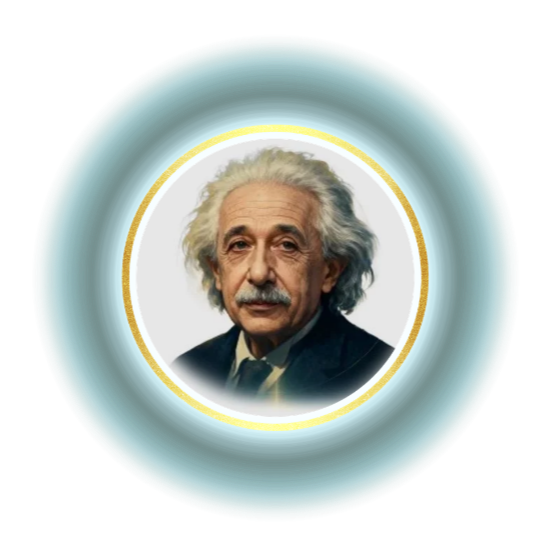
Albert Einstein
His younger sister Maja was his closest confidante. Although an oft-repeated anecdote about his first remark on her birth (“But where are its wheels?”) is likely apocryphal, Maja remained deeply close to Einstein throughout his life and later lived with him in Princeton, where he reportedly read to her regularly after she lost her sight.
A teacher once dismissed his potential. Einstein recalled that a teacher at the Luitpold Gymnasium told him he would “never amount to anything,” reflecting his early resistance to rigid schooling.
Einstein had a secret daughter. In 1902, before his marriage to Mileva Marić, they had a daughter named Lieserl. Her fate remains unknown after she disappeared from the historical record in 1903.
Music helped him think. When stuck on difficult problems, Einstein often played his violin, nicknamed “Lina,” believing that music helped him think intuitively beyond equations.
His divorce anticipated a Nobel Prize. Einstein’s 1919 divorce settlement specified that any future Nobel Prize money would go to Mileva and their children, an agreement he honored after winning the prize.
A skeptic proved him right. Physicist Robert Millikan initially doubted Einstein’s explanation of the photoelectric effect and spent years testing it experimentally. His results confirmed Einstein’s theory and ultimately earned both men Nobel Prizes.
GPS relies on relativity. The GPS in every mobile phone would be off by miles every day if it didn't use Einstein’s general theory of relativity to correct for time ticking faster on satellites than on Earth.
His older son became a leading engineer. Einstein’s son, Hans Albert, became a renowned professor of hydraulic engineering at UC Berkeley, earning distinction in his own right.
His younger son’s life was tragic. Eduard Einstein was a gifted musician and student who later developed schizophrenia and spent much of his adult life in Swiss institutions.
He was close to his second family. Einstein developed a deep bond with his two stepdaughters from his second marriage to Elsa; the eldest, Ilse, served as his secretary for years, while the younger, Margot, was a gifted sculptor who lived with him in Princeton until his death.
Einstein refused to wear socks. He found socks unnecessary and disliked how they wore out, maintaining the habit even during formal occasions.
He was uncomfortable with fame but used it strategically. Although celebrity embarrassed him, Einstein leveraged public attention to speak out on pacifism, civil rights, and nuclear disarmament.
Einstein was outspoken on American civil rights. After moving to the United States, he condemned racism as “America’s worst disease” and supported Black scholars and activists.
The FBI kept a massive file on him. Due to his political views and activism, the FBI monitored Einstein for over twenty years, compiling more than 1,400 pages.
He never learned to drive. Einstein preferred walking or being chauffeured and joked that cars distracted people from more important thoughts.
He became a vegetarian late in life. Although sympathetic to vegetarian ethics for decades, Einstein adopted a strictly meat-free diet only in his final year.
He admired Mahatma Gandhi. Einstein praised Gandhi as a moral role model for humanity and drew inspiration from his philosophy of nonviolent resistance.
His brain was taken after his death. Following Einstein’s death in 1955, a pathologist removed his brain without prior family consent and preserved it for decades for study, a decision that remains controversial.
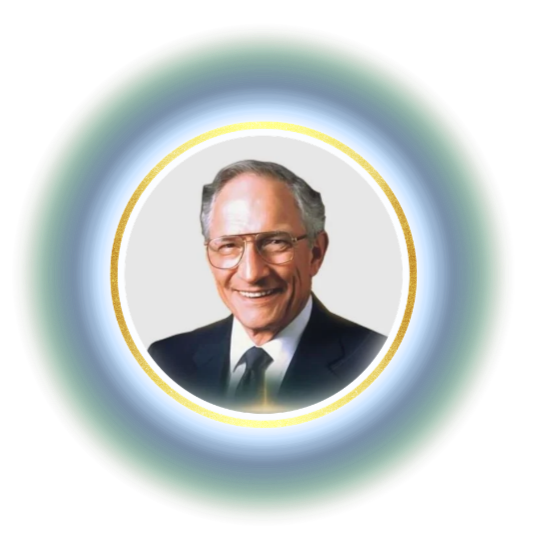
Robert Noyce
He was a champion diver. While at Grinnell College, Noyce won the Midwest Conference diving championship, an early display of the confidence and precision that later defined his approach to innovation.
He was a lifelong musician. A talented oboe player in his youth, Noyce possessed a strong singing voice and deep musical knowledge, remaining actively engaged with music throughout his life.
He chose freedom over prestige early on. After MIT, Noyce turned down offers from major institutions such as IBM and Bell Labs to join Philco, believing a smaller organization would give him greater independence and opportunity.
A Traitorous Eight colleague shaped venture capital. One of Noyce’s Fairchild co-founders, Eugene Kleiner, later co-founded Kleiner Perkins, which became one of the world’s most influential venture capital firms.
He found community through music. A lifelong secular humanist, Noyce later joined a madrigal singing group, frequently hosting rehearsals in his living room.
He felt uneasy about visible wealth. After buying a large home with sweeping views in Los Altos Hills, Noyce reportedly felt guilty, imagining that his parents might have disapproved of what he saw as an extravagant purchase, a reflection of the Midwestern values he never fully shed.
He skied fast and fearlessly. Known for a straight-down, high-speed skiing style, Noyce enjoyed racing younger Intel colleagues on the steep slopes of Aspen.
He maintained his own aircraft. Unlike most executives, Noyce preferred to service and repair his private planes himself, spending weekends tinkering with engines and flight hardware.
He piloted his own long-distance commutes. Years before private jets became common executive perks, Noyce often flew himself between Silicon Valley and Aspen.
He was revered in Japan. In Japan, Noyce achieved near-celebrity status, drawing large crowds eager to hear him speak about the semiconductor revolution.
He kept a pony in suburbia. Despite immense wealth, Noyce kept a pony in the backyard of his Los Altos home for his children, reflecting the modest, Midwestern values he never outgrew.
His first wife became a major philanthropist. After their divorce, Elizabeth Noyce used her settlement to fund transformative philanthropic projects, including the revitalization of downtown Portland, Maine.
He invested casually and forgot about it. Noyce backed dozens of startups, including future giants such as Adobe and Compaq, and famously stored stock certificates in a shoebox, nearly forgetting about them until they were later found to be worth a fortune.
One daughter chose a cloistered life. In contrast to Silicon Valley success, Noyce’s daughter Margaret (Peggy) chose a life of spiritual devotion and became a cloistered nun.
His other children followed diverse paths. His son Bill became a software engineer, while his other daughters Polly and Penny pursued careers in art and in medicine and philanthropy.
He helped guide public education. Noyce served as a Regent of the University of California from 1982 to 1988, contributing to the stewardship of one of the world’s leading public university systems.
He was affectionately dubbed a “teen idol.” Just days before his death, Noyce was amused and touched when employees at Sematech greeted him wearing T-shirts that read, “Bob Noyce, Teen Idol.”
Steve Jobs
His adoption was nearly blocked. Jobs’s biological mother, Joanne Schieble, initially refused to sign the adoption papers because Paul and Clara Jobs were not college graduates. She relented only after they promised to pay for Steve’s future college education.
He reconciled with his biological mother but not his father. Jobs reunited with Joanne Schieble in the mid-1980s, eventually forgiving her and helping care for her later in life. He refused, however, to meet his biological father, Abdulfattah Jandali, despite unknowingly dining several times at Jandali’s Silicon Valley restaurant.
He had both an adopted sister and a biological sister. Jobs grew up with his adopted sister Patti and later learned he had a biological sister, Mona Simpson, who became a successful novelist and one of his closest confidantes.
He lived in near poverty after becoming a dropout. After dropping out of Reed College, Jobs slept on friends’ floors and walked seven miles every Sunday to receive a single weekly meal at the Hare Krishna temple.
Apple was named during a fruitarian phase. Jobs chose the name “Apple” while following a fruit-based diet and seeking a friendly, non-intimidating company name.
Apple’s first employee was his sister. Jobs’s younger sister Patti was technically Apple’s first part-time employee, paid one dollar per board to insert chips into Apple I circuit boards in the family garage.
He exploited a license-plate loophole. Jobs famously drove a silver Mercedes without license plates by leasing a new identical car every six months, taking advantage of California’s grace period for registration.
He demanded beauty in invisible details. Inspired by his adoptive father’s insistence that unseen work should still be well done, Jobs required Apple engineers to make internal circuit boards visually elegant, even though users would never see them.
Perfection delayed furnishing his home. Jobs lived for years in a nearly empty mansion, refusing to buy furniture until he found pieces that met his exacting design standards.
Pixar nearly failed before succeeding. Long before becoming a cultural powerhouse, Pixar struggled financially, with Jobs personally funding the company while refining its long-term vision.
He distrusted market research. Jobs believed customers often did not know what they wanted until they saw it, relying instead on intuition and tight end-to-end control.
PowerPoint was discouraged at Apple. Jobs banned formal slide presentations in many internal meetings, insisting that clear thinking mattered more than polished visuals.
He dated a folk music icon. In the early 1980s, Jobs had a high-profile relationship with Joan Baez, a bond reportedly deepened by his admiration for her former partner, Bob Dylan.
The aquarium proved the iPod could shrink. When engineers claimed the original iPod could not be made smaller, Jobs dropped it into an aquarium. Rising air bubbles revealed unused space, and he ordered the design reduced in size.
His keynotes were meticulously rehearsed. Jobs treated product launches as theatrical events, rehearsing extensively to achieve the illusion of effortless spontaneity.
He rejected dynastic wealth. Jobs chose not to leave a large inheritance to his children, a philosophy later echoed by his widow, Laurene Powell Jobs, who has argued that massive legacy wealth can be socially harmful.
His children followed diverse paths. All of Jobs’s children pursued careers outside Apple: Lisa became an author and journalist, Reed founded a cancer-research venture firm, Erin worked in architectural design, and Eve became an elite equestrian and fashion model.
The family legacy is managed quietly. Laurene Powell Jobs oversees the family’s philanthropic and investment efforts through the Emerson Collective, which blends venture investing with discreet social impact work.